Regular inspection of pressure vessels is essential to prevent hazards caused by weakening or corrosion. According to the National Board Inspection Code (NBIC), pressure vessels must be inspected at half of their remaining service life or every 10 years, whichever comes first.
If the remaining life of a vessel is less than four years, inspections may occur at the full remaining life, up to a maximum interval of two years. The exact inspection schedule is determined by a certified inspector, based on the vessel’s condition and corrosion rates observed during initial and follow-up inspections.
Interested? Let's Get Started.
Just fill out some contact information and we will be in touch.
What’s Included in the Pressure Vessel Inspection Service?
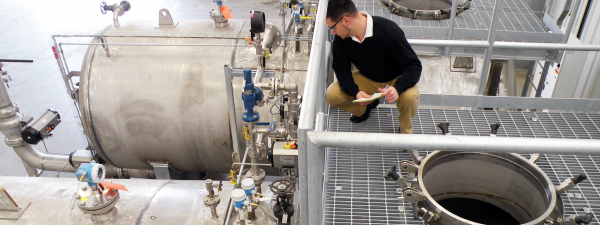
Our certified NDT technicians and licensed engineers provide comprehensive inspections of processing equipment to help operators prevent failures, optimize efficiency, extend equipment service life, and reverse corrosion. Equipment longevity and performance are influenced by operating conditions, water quality, and maintenance practices. After the inspection, operators receive detailed inspection reports and actionable results to make informed decisions and maintain peak equipment performance.
Eddy Current
Remote Field Heat Exchanger Tube Evaluation
Ultrasonic Thickness Test
Articulating Boroscope
Magnetic Particle
Liquid Dye Penetrant
Vacuum Leak
Alloy Identification (On-Site)
Corrosion Analysis
Remaining Life Calculation
Coating Analysis
Technician Qualifications Include: Certified NDT Inspectors, Certified Welding Inspectors, Certified API 653 Inspectors, Field inspections are supported by a complete materials testing laboratory and registered professional engineers, Knowledge and experience with applicable codes, standards and regulation including American Petroleum Institute (API) standards-510, 570, 653 and NBIC.